
- 20+ Years of Design Experience — Olga Rechdouni, ASID
- ASID Professional Member
- Custom Design · Fabrication · Installation
- Luxury Homes Throughout Los Angeles
Custom Drapery for Bedrooms
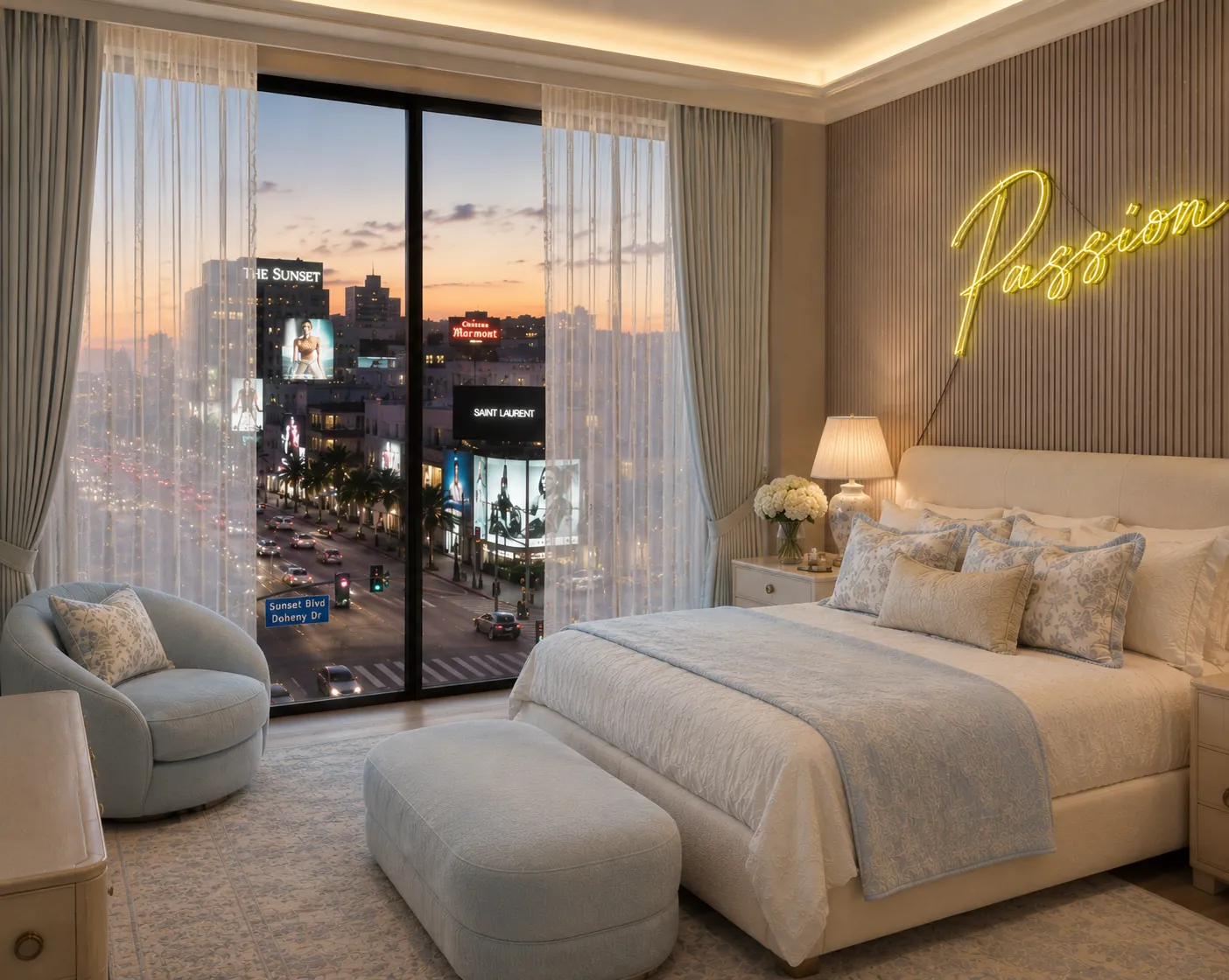
Bedroom drapery is a sleep-quality specification before it is a decorative one. The studio specifies layered systems — sheer for daytime softness, blackout for sleep, motorization for bedside control — so the room performs without ever announcing how.
Why Choose This Style
A bedroom that does not go dark on demand is a bedroom that compromises sleep. We specify three-pass blackout interlined with side-channel light control as the default in primary suites.
Acoustic absorption matters more in bedrooms than most clients realize. A heavyweight drapery panel, ceiling-mounted with full returns, lowers ambient noise measurably and changes how the room reads at night.
Motorization belongs in primary bedrooms. Bedside keypad control of sheers and blackout is the single most-cited reason clients tell us their drapery program changed how they live in the house.
Where Bedroom Drapery Belongs
- Primary suites
- Guest bedrooms
- Children's bedrooms
- Teen rooms
- 8–12 ft. standard
- Specified taller when architecture allows
- All architectural styles — specification is room-driven, not style-driven
Frequently Asked Questions
- Do I really need blackout in a primary bedroom?
- Yes. Even a small percentage of light leak around the panel edges is enough to disturb sleep architecture. We specify side channels or generous side returns to seal the perimeter.
- Can blackout drapery still look luxurious?
- When it is built as a three-pass interlined assembly behind a Belgian linen or silk face, it reads as the softest drapery in the room — not as a blackout shade.
- Should bedroom drapery be motorized?
- In primary suites, yes. Bedside control is the difference between a beautiful drapery and a drapery that actually gets used.
Bedroom Drapery Across Los Angeles
The studio works privately throughout Greater Los Angeles — measuring, fabricating, and installing bedroom drapery for residences in:
Consultations are also available throughout Calabasas, Hidden Hills, Hancock Park, Woodland Hills, and the surrounding foothill and coastal neighborhoods — see all studio service areas.
Bedroom Drapery is documented across the studio archive. Recent installations include Reseda Great Room Drapery, Beverly Hills Estate Window Treatments, and Pacific Palisades Master Bedroom — Monogrammed Linen Cornices. For the broader practice in this area, see custom drapery in Beverly Hills, and custom drapery in Los Angeles. Pricing for projects of this scope is set out in the 2026 Custom Drapery Pricing Guide.