
The Studio · Service

Acoustic Drapery

Acoustic drapery is the discipline of specifying fabric, fullness, lining, and mounting to absorb sound — softening echo, reducing reflection, and changing how a room actually feels to be in. Specified well, it is invisible engineering: the room reads as quieter, warmer, and more private without ever announcing how.

Acoustic Drapery
Why Choose Acoustic

Why Choose This Style

Hard surfaces — glass, plaster, stone, concrete, wood — are everywhere in contemporary Los Angeles architecture, and they bounce sound. The result is a room that looks beautiful and feels loud. Acoustic drapery is the most architecturally honest way to absorb that energy without compromising the architecture or the view.

We specify acoustic drapery as a system: heavyweight or velvet face fabric, acoustic interlining, generous fullness (typically 2.5x to 3x), full-length panels mounted ceiling-to-floor, and side returns to the wall. The construction is what does the absorption — not the fabric label.

Our acoustic specifications are written for the exact use of the room: a home theater asking for reflection control, a nursery asking for sleep-quality quiet, a restaurant asking to drop conversational decibel levels by five to seven points. The brief shapes the build.

Best Applications

Where Acoustic Drapery Belongs

Room Types
  • Home theaters
  • Nurseries
  • Primary bedrooms
  • Restaurants
  • Hotels
  • Offices and boardrooms
Ceiling Heights
  • All ceiling heights
  • Especially valuable in 12 ft.+ rooms where reverberation accumulates
Architecture
  • Contemporary
  • Modernist
  • Mid-century modern
  • Industrial conversions
  • Hospitality interiors
FAQ

Frequently Asked Questions

Does drapery actually absorb sound, or is it just marketing?
Acoustic absorption from drapery is measurable and well-documented. The variables are fabric weight, weave density, fullness ratio, panel coverage relative to wall surface, and air gap between panel and wall. A correctly specified acoustic drapery system can reduce reverberation time in a room by 30–50%; a thin, flat, half-stack curtain will do almost nothing. The discipline is in the specification.
What fabrics work best for acoustic drapery?
Heavyweight velvet, wool, felt-backed linen, and dedicated acoustic textiles with published NRC (Noise Reduction Coefficient) ratings. We specify fabric to the room: velvet for home theaters and hospitality, wool for offices and boardrooms, heavyweight linen interlined with acoustic batting for residential primary suites.
Can acoustic drapery be combined with blackout, motorization, or fire-retardant specifications?
Yes — and it routinely is. Nurseries combine acoustic and blackout. Hospitality combines acoustic, blackout, motorization, and IFR. The studio specifies all four disciplines together when the project calls for it.
Will acoustic drapery look heavy or institutional?
Not when it is specified by a designer rather than pulled from an acoustic-textile catalog. We use the same Belgian linens, Italian wools, and European velvets we specify for any other primary residence — chosen for hand and color first, acoustic performance second. The room reads as luxurious, not as a recording studio.
Is acoustic drapery worth the investment for residential clients?
In any room where the homeowner has ever said the words 'it feels loud in here' — yes. The acoustic difference between a room with a properly specified drapery program and the same room with bare windows is the single most surprising experience clients report in the year after installation.
By Space

Where Acoustic Drapery Lives

Home Theaters

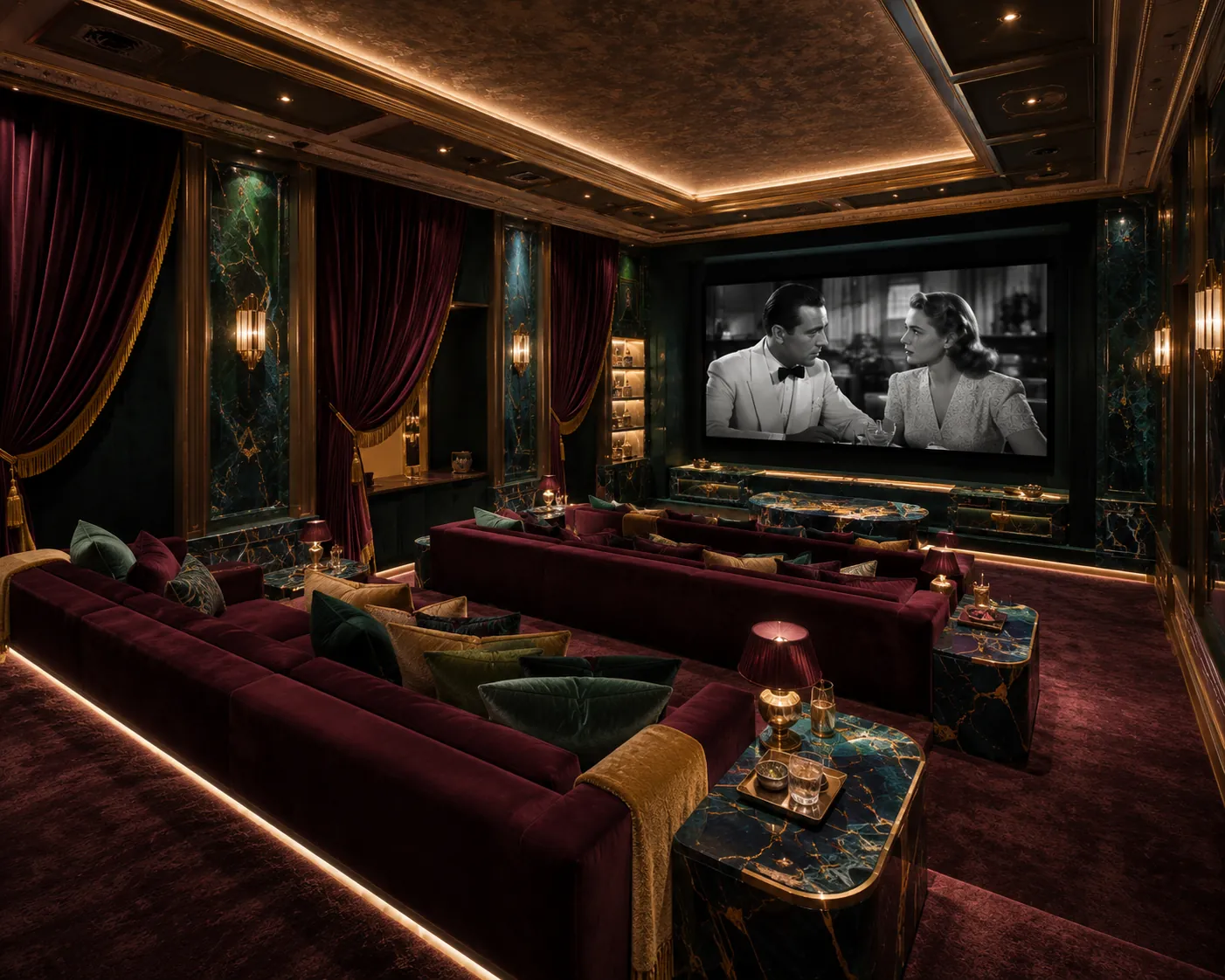
A home theater lives or dies by reflection control. Hard side walls bounce dialog and effects back into the listening position; the result is a soundtrack that reads as muddled rather than dimensional. We specify heavy velvet or wool-blend acoustic panels, full-fullness pleated, mounted from ceiling track on every side wall the room allows — and on the rear wall where the screen does not preclude it. The drapery is part of the acoustic design from the framing stage forward.

Nurseries

In a nursery, acoustic drapery and blackout drapery answer two questions at once: the room must read as dark for sleep, and quiet enough that footsteps in the hallway and traffic outside do not wake the child. We specify a layered system — performance sheer for daytime, three-pass blackout interlined and side-channeled for sleep, with the blackout fabric itself selected for its acoustic absorption rating. The result is a room that absorbs sound at the wall plane it lines.

Bedrooms

Adult primary bedrooms benefit from acoustic drapery in ways most homeowners do not realize until they experience it. A heavyweight linen or velvet, interlined for body and acoustic absorption, mounted ceiling-to-floor with full returns, drops the perceived ambient noise of a room measurably. Sleep quality follows. We specify acoustic-grade drapery as the default in primary suites adjacent to busy streets, in hillside homes exposed to canyon wind, and in any bedroom that reads as 'echoey' before drapery is hung.

Restaurants

A great restaurant interior fails when guests cannot hear each other across the table. The fix is rarely architecture — it is soft surfaces, and drapery is the most flexible soft surface in the room. We specify acoustic drapery for restaurants as full-height velvet or wool panels, often in alcoves and along banquette walls, engineered to drop conversational decibel levels by five to seven points and to make every table feel private. Fire-retardant rating to NFPA 701 is non-negotiable in this category.

Hospitality Spaces

Hotel guest rooms, lobbies, ballrooms, and event spaces all rely on drapery for the acoustic experience the architecture cannot provide alone. We specify layered systems for hospitality projects: a sheer for daytime softness, an acoustic privacy layer for evening, a true blackout assembly for sleep — all motorized, all integrated with the property's keypad and PMS ecosystem, all built to inherently fire-retardant specification. The drapery is part of the guest experience, not a decorative afterthought.

Offices and Boardrooms

Modern offices — open-plan, glass-walled, hard-surfaced — are acoustically among the most difficult interiors to inhabit. A boardroom with floor-to-ceiling glass on two sides will read as fatiguing inside fifteen minutes of meeting time. We specify acoustic drapery for executive suites, boardrooms, and private offices as a tailored, architectural panel program — heavyweight wool or felt-backed linen, full-fullness, ceiling-mounted, often paired with concealed motorization for daytime closure. The room becomes a place where work can actually happen.

The Consultation

Begin with the room.
We will design the rest.

Schedule a Consultation
Continue the Conversation

Ready to design your windows the way the room deserves?

Begin with a private consultation. We will follow with a tailored proposal, fabric direction, and an honest opinion on what your room is asking for.