
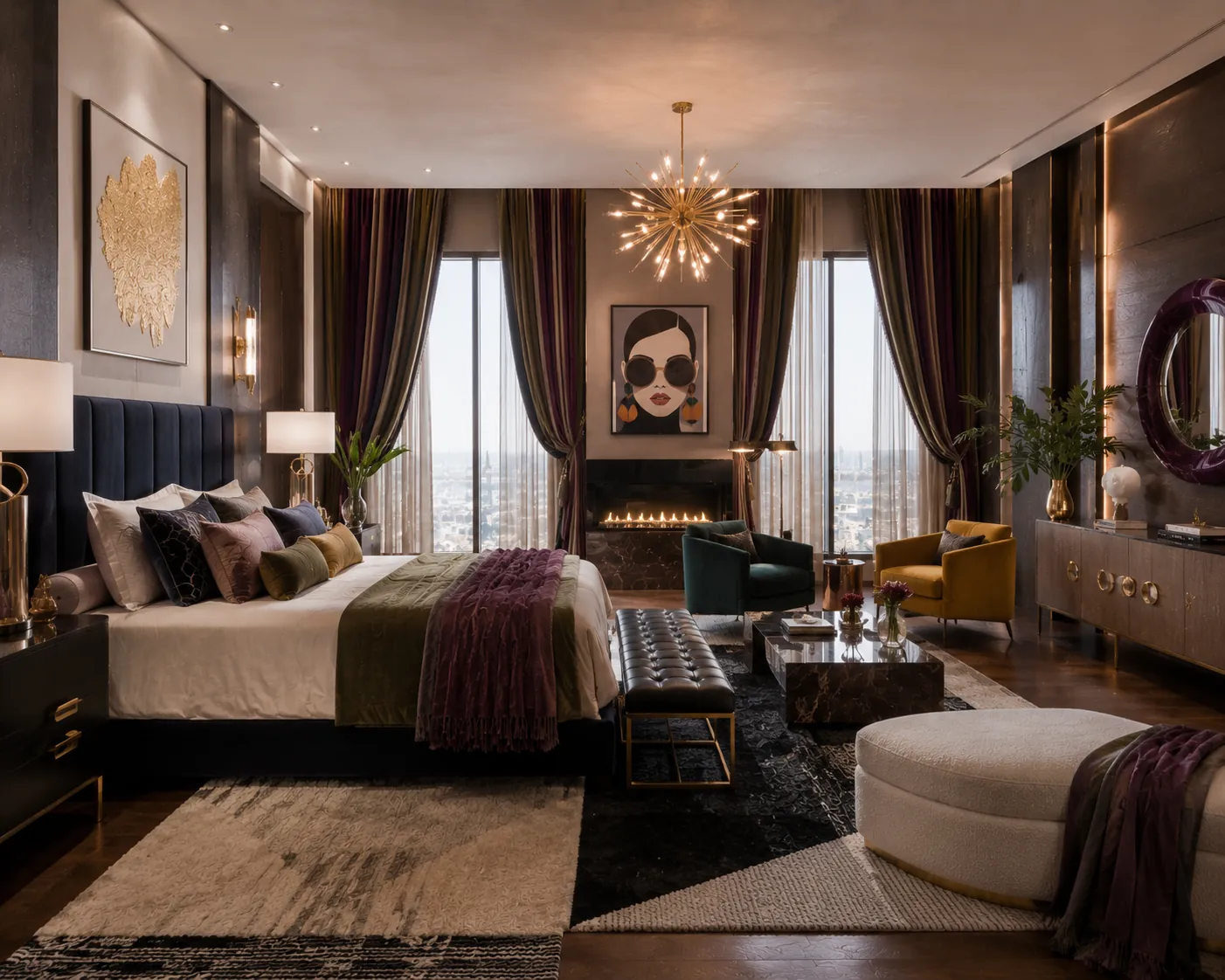
Custom Blackout Curtains & Drapery in Los Angeles
True blackout drapery requires more than a blackout lining. It requires return panels, side channels, sealed headers, and a fabric weight that absorbs the small amount of light a three-pass lining still admits.

Why Choose This Style
We specify blackout drapery for primary suites, nurseries, and media rooms where the room must read as fully dark at noon. Most 'blackout' drapery sold in Los Angeles meets none of the conditions required to actually achieve that.
Our blackout systems are engineered as an assembly: three-pass lined panels, drywall pockets or fabric-wrapped cornices to seal the top, side channels or generous wand returns at the wall, and floor-puddled or sill-sealed bottoms.
The result is a room that can be made dark on demand — and a drapery that still reads as soft, designed, and architecturally correct when the room is open to the light.
Where Blackout Drapery Belongs
- Primary bedrooms
- Nurseries
- Media rooms
- Guest suites
- Hotel-style guest rooms
- All ceiling heights
- Especially valuable in coved or pocketed ceilings
- All architectural styles
Frequently Asked Questions
- Is blackout lining alone enough?
- No. A three-pass blackout lining stops light through the body of the panel but does nothing at the top, sides, or bottom — which is where 90% of light leak in a 'blackout' room actually occurs.
- Can blackout drapery be sheer or layered?
- Blackout panels are never sheer, but they are routinely layered behind a sheer or linen front panel so the room reads soft by day and dark by night.
- Will blackout drapery damage the fabric face?
- Only if specified incorrectly. We interline the blackout to protect the face fabric from sun heat and to give the panel the weight required to fall correctly.
