
- 20+ Years of Design Experience — Olga Rechdouni, ASID
- ASID Allied
- Custom Design · Fabrication · Installation
- Luxury Homes Throughout Los Angeles
Our Design Process: From your first call to final installation.
A transparent look at what clients experience when they work with House of Drapery by Duroque — from the first inquiry through consultation, design, fabrication, and installation in Los Angeles.
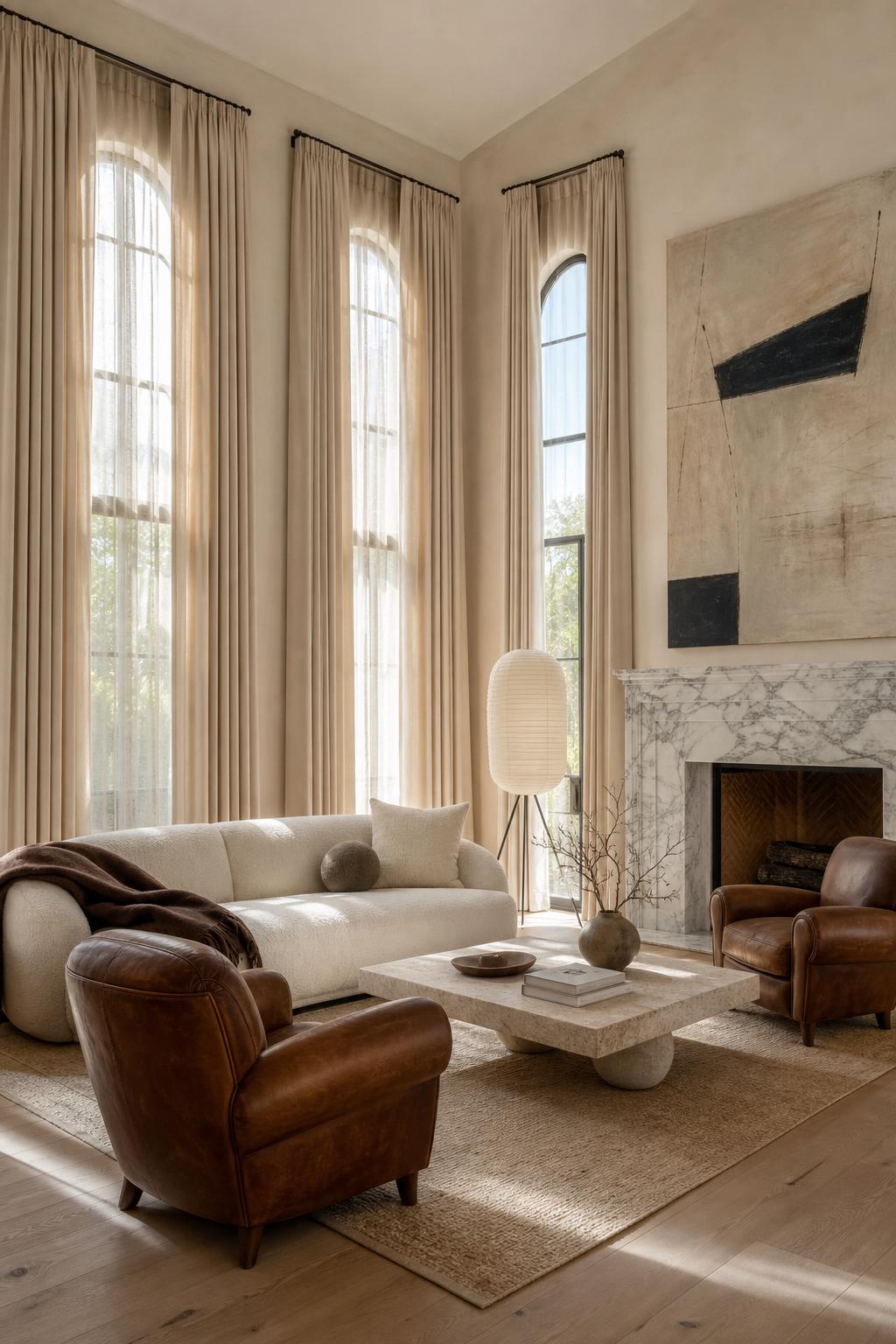
Designer-led, from first call to final walkthrough.
House of Drapery by Duroque is a designer-led custom drapery studio. The consultation is not a sales presentation. Every project begins with an understanding of the home, the architecture, the lifestyle, and the functional needs of the room — before any fabric, hardware, motorization, or style is proposed. Professional design guidance is included as part of the custom drapery service.
- 01First contact & fit call
- 02In-home consultation
- 03Designer evaluation
- 04Design recommendations
- 05Fabric & hardware selection
- 06Complimentary proposal
- 07Custom fabrication
- 08Quality control
- 09Professional installation
- 10Final walkthrough
Your first call or message
Clients reach the studio by phone, text, email, or through the website. We reply using your preferred method. A short 10 to 15 minute conversation is used to understand the project, answer your initial questions, and confirm whether the studio is the right fit for what you are trying to achieve.
If the project is a good match, an in-home consultation is scheduled — typically within 48 hours, subject to availability.

Before the consultation
No preparation is required. Inspiration photos, Pinterest boards, floor plans, or magazine clippings are welcome, but entirely optional. You do not need to have any decisions made in advance.
Who should attend
We ask that everyone involved in the design decisions attend the consultation. Drapery specifications touch architecture, light, privacy, and daily habits — the conversation is more useful when every decision-maker is in the room.
The designer-led consultation
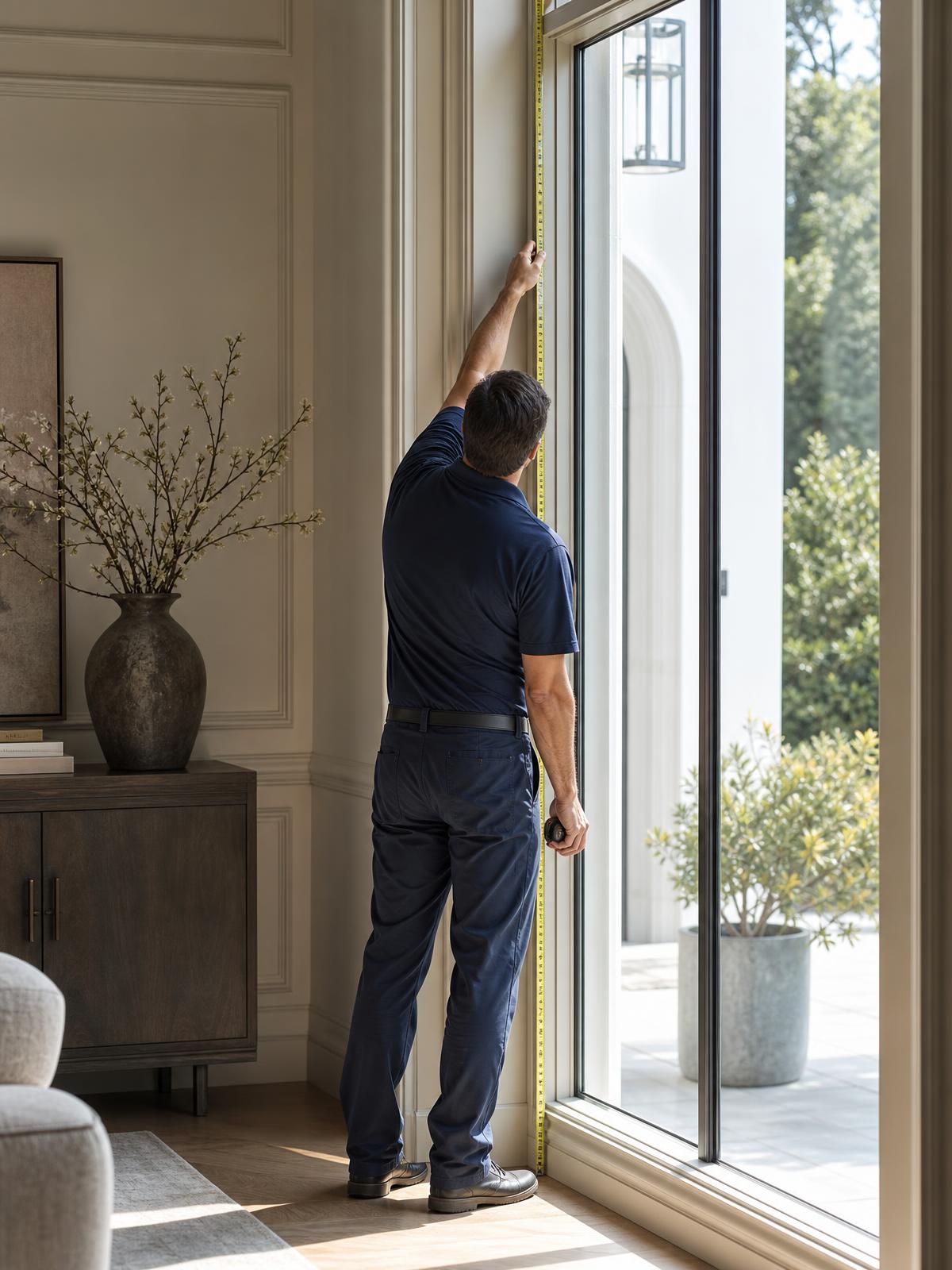
The designer arrives alone or with an assistant. During the appointment, we evaluate the home, the architecture, the windows, the ceiling heights, the natural light, the furniture layout, the room proportions, and any existing window treatments.
Understanding how you live
The conversation covers, among other things:
- Privacy and light control
- Blackout requirements for bedrooms and media rooms
- Operating habits — daily use, seasonal use, children, pets
- Manual vs. motorized operation
- Design preferences: colors, textures, fabric types
- Budget and timeline
- How the room is actually used
Design recommendations
With that context, the designer develops recommendations tailored to the room. These may include sheers, blackout systems, decorative drapery, layered treatments, pleat styles, decorative hardware, manual or motorized operation, fabric composition, texture, and color palette.
Related reading: motorized drapery, blackout drapery, sheer drapery, and decorative hardware.
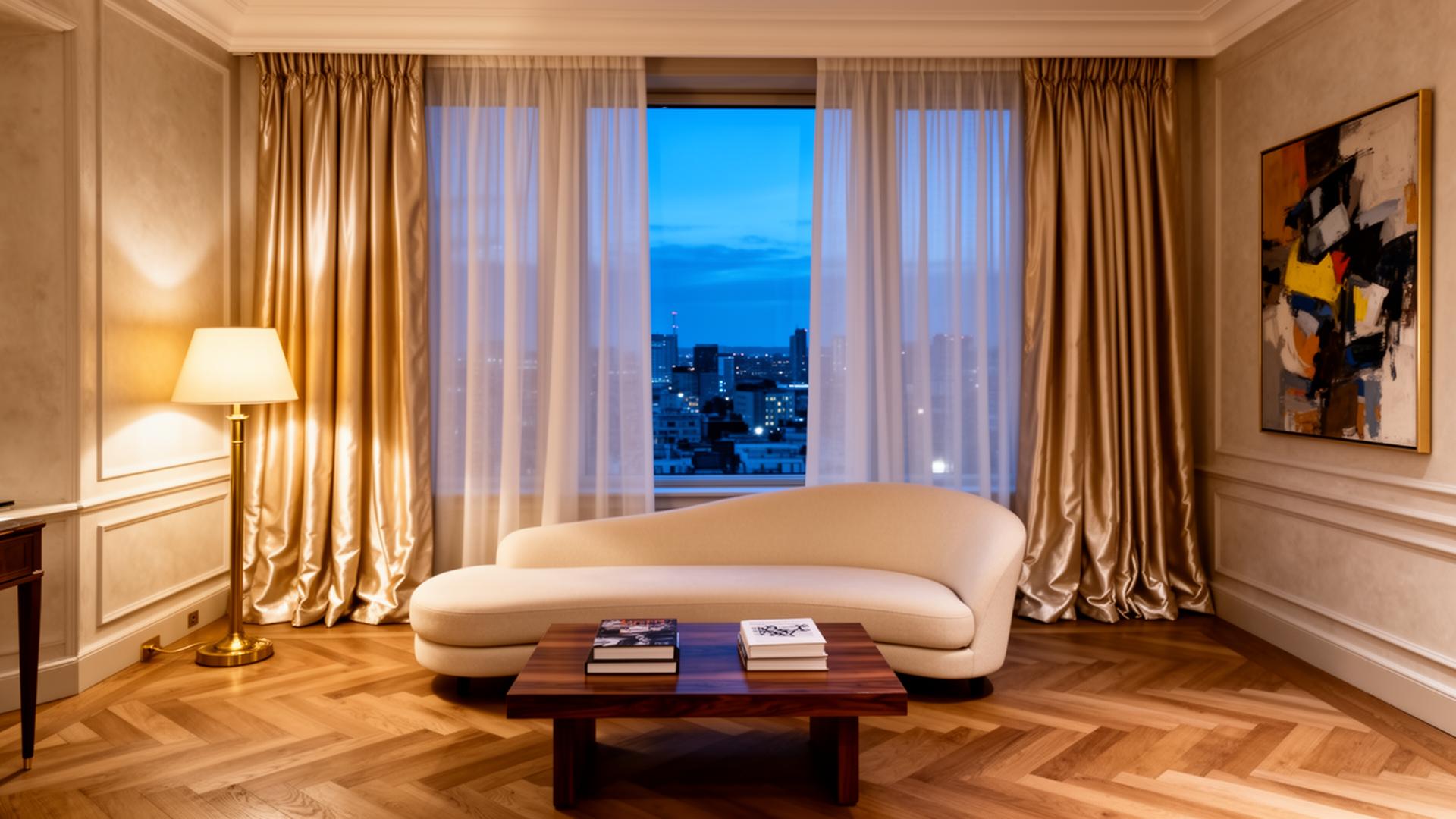
Fabric selection
A curated collection of fabric samples is brought to the consultation so the conversation about color and texture happens in your actual light, against your actual walls and furnishings.
Because thousands of fabrics are available across our mills and partners, additional samples may be sourced after the consultation if needed to refine the direction.
Hardware recommendations
Decorative hardware, tracks, and motorized systems are specified alongside the drapery itself so that finish, scale, and operation are considered together rather than as an afterthought.
Complimentary written proposal
A detailed written proposal is provided at no charge following the consultation. It can be reviewed and discussed by phone, text, or email at your convenience.
For a broader view of how investment is structured, see our custom drapery cost guide.
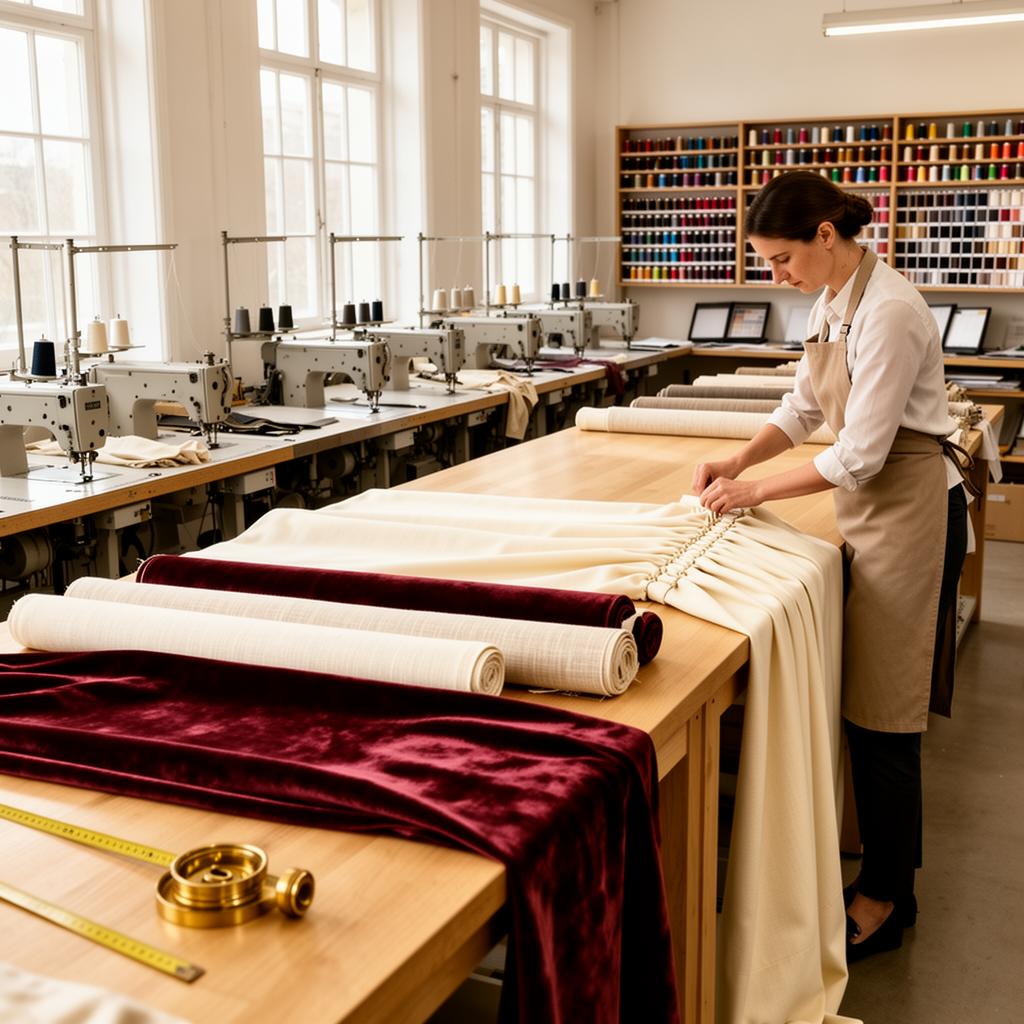
Custom fabrication
Every treatment is custom made for your specific windows, hardware, and specifications. Manufacturing timelines depend on scope and material availability:
Lead times vary by project and typically range from approximately 2–8 weeks, depending on fabric and hardware availability, fabrication requirements and project complexity. Rush service may be available for qualifying projects.
Quality control
Every treatment is inspected in the workroom before it leaves for installation — hems, leading edges, pleat geometry, header stability, and hardware fit are all checked against the specification.
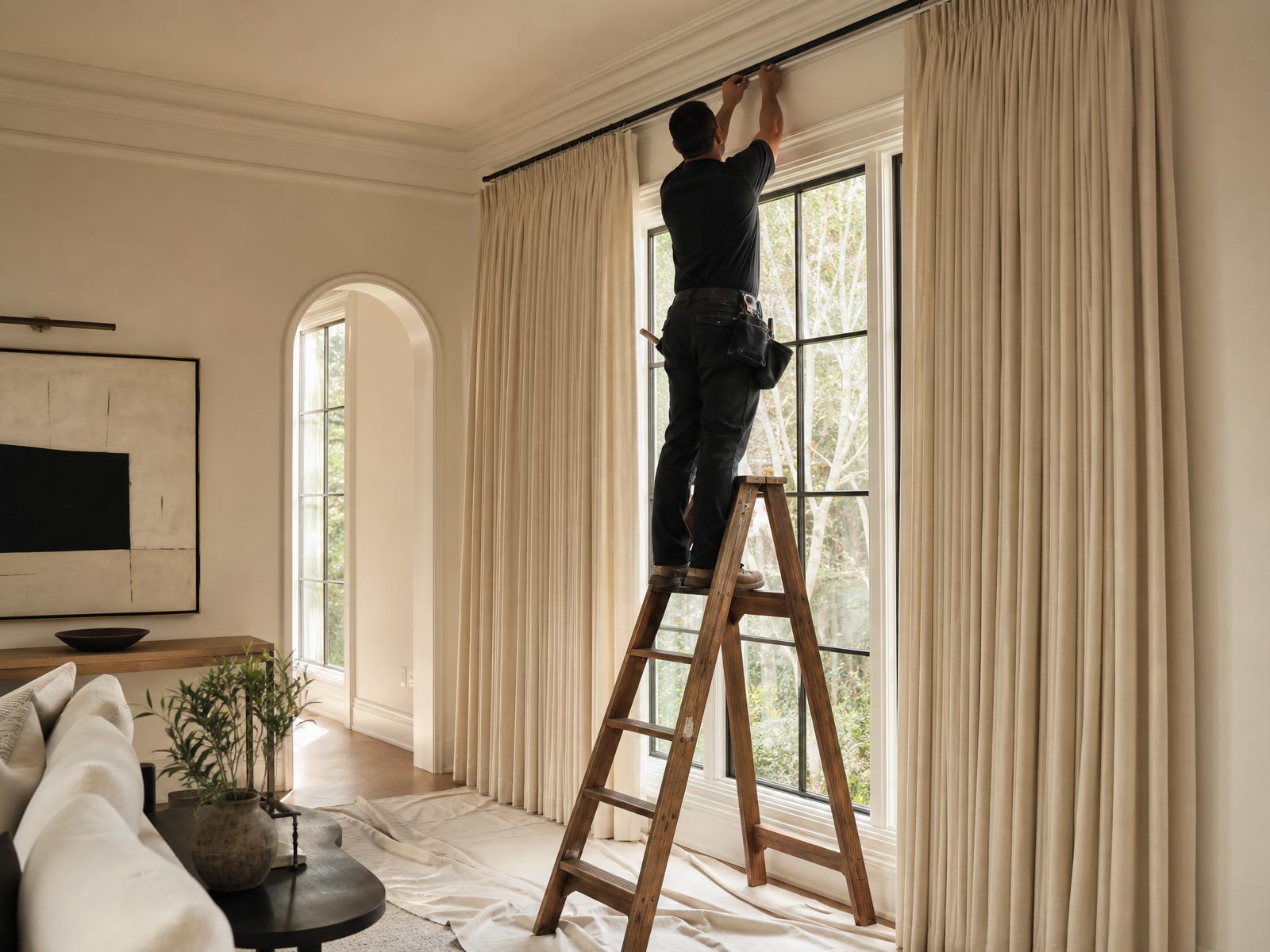
Professional installation
The installation team protects surrounding surfaces, installs the treatments, tests operation, and programs motorization where applicable. Nothing leaves site until every treatment operates exactly as intended.
For a deeper look at installation considerations, see our installation guide and custom drapery installation in Los Angeles.
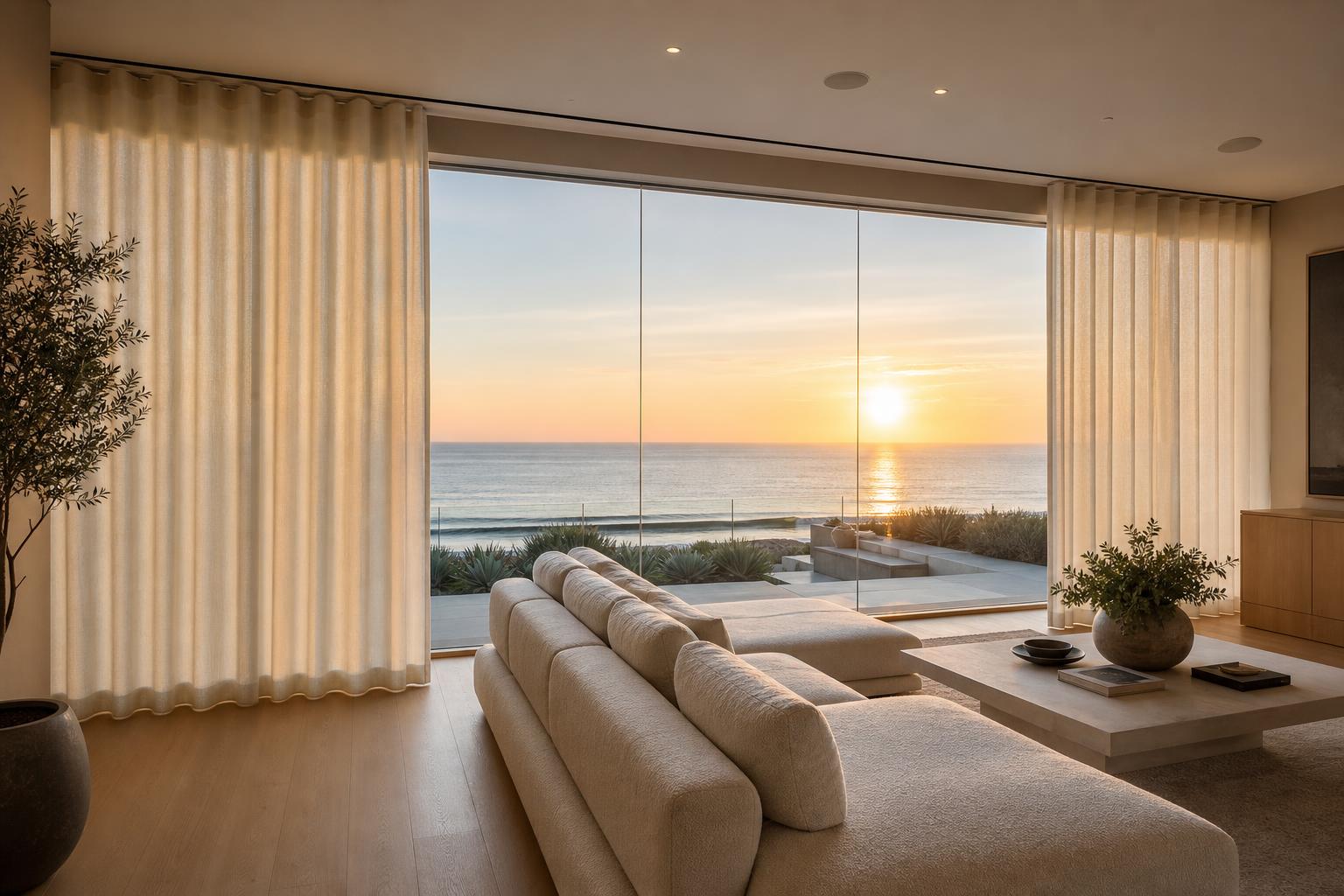
Final walkthrough
We complete the project with a final walkthrough — demonstrating operation and care, answering final questions, and confirming that every treatment performs the way it was designed to.
Every recommendation begins with how people live.
Beautiful window treatments begin with understanding how people live — not simply covering a window. Our recommendations are based on architecture, lifestyle, comfort, function, and timeless design. Fabric is the last conversation, not the first.
Learn more about the designer behind the studio on the About Olga page.
From "I'm Not Sure What I Need" to a Complete Drapery Plan
You may begin with nothing more than a room, a window and a general idea of how you want the space to feel.
We help turn that into a clear design direction.
The process may include determining:
- treatment type
- fabric direction
- privacy and light control
- lining or layering
- pleat or heading
- fullness
- finished dimensions
- floor relationship
- one-way or center-open operation
- stack
- track and hardware requirements
- manual or motorized operation
- fabrication requirements
- installation requirements
These decisions are developed together because each can influence the next.
The result is not simply a fabric selection. It is a complete custom drapery specification designed around the room and the way it is used.
One Decision Affects the Next
Custom drapery is not a series of isolated product choices.
Fabric affects construction. Construction affects weight. Weight can affect hardware. Hardware affects operation and mounting. Operation affects stack and panel configuration. The room itself affects placement, finished dimensions and how the treatment should function.
House of Drapery by Duroque brings these decisions together as one complete drapery design and specification.
Because one drapery decision often changes another. A blackout requirement can affect lining and construction. Construction affects finished weight. Weight can affect the hardware or motor requirements. Hardware affects mounting and operation. Operation affects panel configuration and stack. Fabric behavior can affect the finished length.
We Help You Make the Complete Decision
- Should the treatment be drapery, a Roman shade, another shade—or a layered combination?
- Do you need privacy, light filtering or blackout?
- Should the drapery be lined? What type of lining makes sense for the fabric and room?
- Which fabric has the right texture, weight, drape and performance for the application?
- Which heading or pleat works with the design?
- How much fullness is appropriate?
- Should the drapery open from the center or travel one way?
- Where should it stack when open?
- Should the treatment be wall-mounted, ceiling-mounted, recessed, inside-mounted or outside-mounted?
- What should the finished length be?
- Should the drapery kiss the floor, break at the floor, puddle—or sit slightly above it when the textile and use call for that?
- What type of track or hardware is appropriate?
- What carrier or glider configuration does the selected system require?
- Are master carriers appropriate for the selected track and operating configuration?
- Should the treatment be manual or motorized?
- If it is motorized, what does the finished drapery require from the selected track and automation system?
- How should the treatment relate to the furniture, flooring, architecture, art, color and materials already in the room?
These are not isolated questions. One answer often affects the next.
House of Drapery by Duroque evaluates them together as one complete drapery design and specification.
Drapery Designed as Part of the Room
A window treatment does not exist separately from the interior around it.
House of Drapery by Duroque is interior designer-led, so the drapery is considered in relation to the complete room—its architecture, furniture, flooring, lighting, art, color, texture, materials, proportion and everyday use.
That broader design perspective helps determine not only which fabric looks appropriate, but also the scale of the treatment, where it should begin and end, how much visual weight it should carry, how it should frame the architecture and how it should function within the space.
The goal is not simply to cover a window. It is to design a treatment that belongs in the room.
Choosing the Fabric Is Only One Part of the Specification
A fabric can be beautiful and still not be the right specification for a particular treatment.
Its fiber content, width, weight, texture, opacity, drape and dimensional behavior can influence the way the finished treatment is constructed and hangs.
Depending on the application, fabric selection may also involve considerations such as UV exposure, moisture, cleanability, documented performance characteristics and intended use.
The fabric can influence lining, fullness, construction, finished length, hardware and motorization requirements.
That is why House of Drapery by Duroque evaluates the textile as part of the complete treatment rather than selecting fabric in isolation.
Do My Drapes Need Lining?
Not every treatment requires the same lining.
The appropriate construction depends on the fabric, desired appearance, privacy, light-control requirements and use of the room.
Depending on the project, the treatment may be unlined or may incorporate standard lining, light-filtering lining, blackout construction, interlining where appropriate, a separate sheer layer or another layered solution.
The lining decision also affects the finished treatment. It can change the opacity, body, construction and weight of the drapery, which may in turn affect the hardware and operating requirements.
House of Drapery by Duroque considers the fabric, function and design together before determining the appropriate construction.
Should Drapery Touch the Floor?
There is no single finished length that is right for every room or every textile.
Depending on the design, drapery may kiss the floor, break at the floor, puddle or sit slightly above it where the textile, room conditions or intended use call for clearance.
The decision also depends on the hardware position, construction, floor conditions and behavior of the selected textile.
Finished length should therefore be specified as part of the complete treatment rather than selected from a universal formula.
Should Drapery Open From the Center or One Side?
The answer depends on the architecture and how the opening is used.
A center-open treatment may make sense when balanced access and symmetry are important. A one-way treatment may be more appropriate when the drapery needs to stack away from a door, view, furniture arrangement or circulation path.
That decision affects panel configuration, stack location, hardware and the way the treatment is fabricated.
House of Drapery by Duroque determines the operating direction as part of the overall drapery design.
Which Drapery Track Do I Need?
The track should be selected for the treatment being designed—not treated as an unrelated purchase.
The appropriate system can depend on finished drapery weight, track length, mounting conditions, manual or motorized operation, one-way or center-open movement, single or layered treatments, stack requirements and the carrier or glider configuration required by the system.
Returns, master carriers and other components are specified where appropriate to the selected system and treatment.
House of Drapery by Duroque coordinates the drapery specification with the hardware requirements so the two work together.
Which Drapery Pleat Should I Choose?
The right pleat or heading depends on the design of the room, the fabric, the desired fullness, the hardware and how the drapery will operate.
A ripple or wave-style treatment creates a continuous, structured rhythm. French pleats create a more tailored heading. Inverted pleats can create a cleaner architectural appearance. Other constructions may be appropriate depending on the design.
The heading is not simply a decorative choice. It affects how the fabric is distributed, how the treatment stacks and how it relates to the selected hardware.
House of Drapery by Duroque specifies the heading as part of the complete drapery design rather than treating it as an isolated style choice.
How Much Fullness Do My Drapes Need?
Fullness is the relationship between the amount of fabric used and the finished width of the treatment, but there is no single fullness ratio that is right for every custom drapery project.
The appropriate fullness depends on the heading, fabric, desired appearance, hardware system, stack requirements and overall design.
More fabric is not automatically better. The goal is to specify enough fullness for the intended design and construction while considering how the finished treatment needs to hang, stack and operate.
Not sure which of these options is right for your room? You don't need to figure it out before contacting us.
Send us a photo of your room or window. A photo is enough to start; measurements are helpful, but not required.
Questions about motorization are covered on our motorized drapery page. When you are ready, you can show us your window or request a private consultation.
About the consultation and process.
- What happens after I contact the studio?
- We reply using your preferred method — phone, text, or email — and begin with a 10 to 15 minute conversation to understand the project and confirm fit. If appropriate, we schedule an in-home consultation, typically within 48 hours.
- Do I need to prepare anything before the consultation?
- No preparation is required. Inspiration photos, Pinterest boards, plans, or magazine clippings are welcome but optional.
- Do I need to know what type of drapery I need before contacting you?
- You don't need to know exactly what type of drapery you need before contacting us. During the consultation, we evaluate the room, windows, architecture, light, privacy requirements, existing furnishings, how the space is used and the look you want to achieve. From there, we can recommend the appropriate design direction, fabric, construction, lining, hardware and operating configuration.
- Is drapery design included?
- For full-service custom drapery projects, drapery design is part of the House of Drapery by Duroque service rather than a separate design add-on. Clients do not need to arrive knowing the exact fabric, pleat, lining, fullness, track or finished length they need. During the consultation and specification process, we evaluate the room, the window or door, architecture, light, privacy, existing interior, intended use and design direction. From there, we develop the treatment and the technical specification required to execute it.
- What does a drapery designer actually determine?
- A custom drapery designer helps determine how the treatment should look, function and be constructed for the actual room. Depending on the project, that can include treatment type, fabric, lining, heading or pleat, fullness, finished dimensions, floor relationship, returns, stack, center-open or one-way operation, track and hardware requirements, manual or motorized operation and installation conditions. At House of Drapery by Duroque, those decisions are considered in relation to the architecture, furnishings, light, privacy, lifestyle and intended use of the room.
- Is the consultation a sales appointment?
- No. Nothing is sold during the consultation. The purpose is to understand your home and develop the right design solution.
- How long does custom drapery take to make?
- Lead times vary by project and typically range from approximately 2–8 weeks, depending on fabric and hardware availability, fabrication requirements and project complexity. Rush service may be available for qualifying projects.
- Do you charge for the written proposal?
- No. A detailed written proposal is provided at no charge following the consultation.
The first step is a short conversation.
When you are ready, we would be glad to hear about your project. There is no obligation and nothing is sold during the consultation.