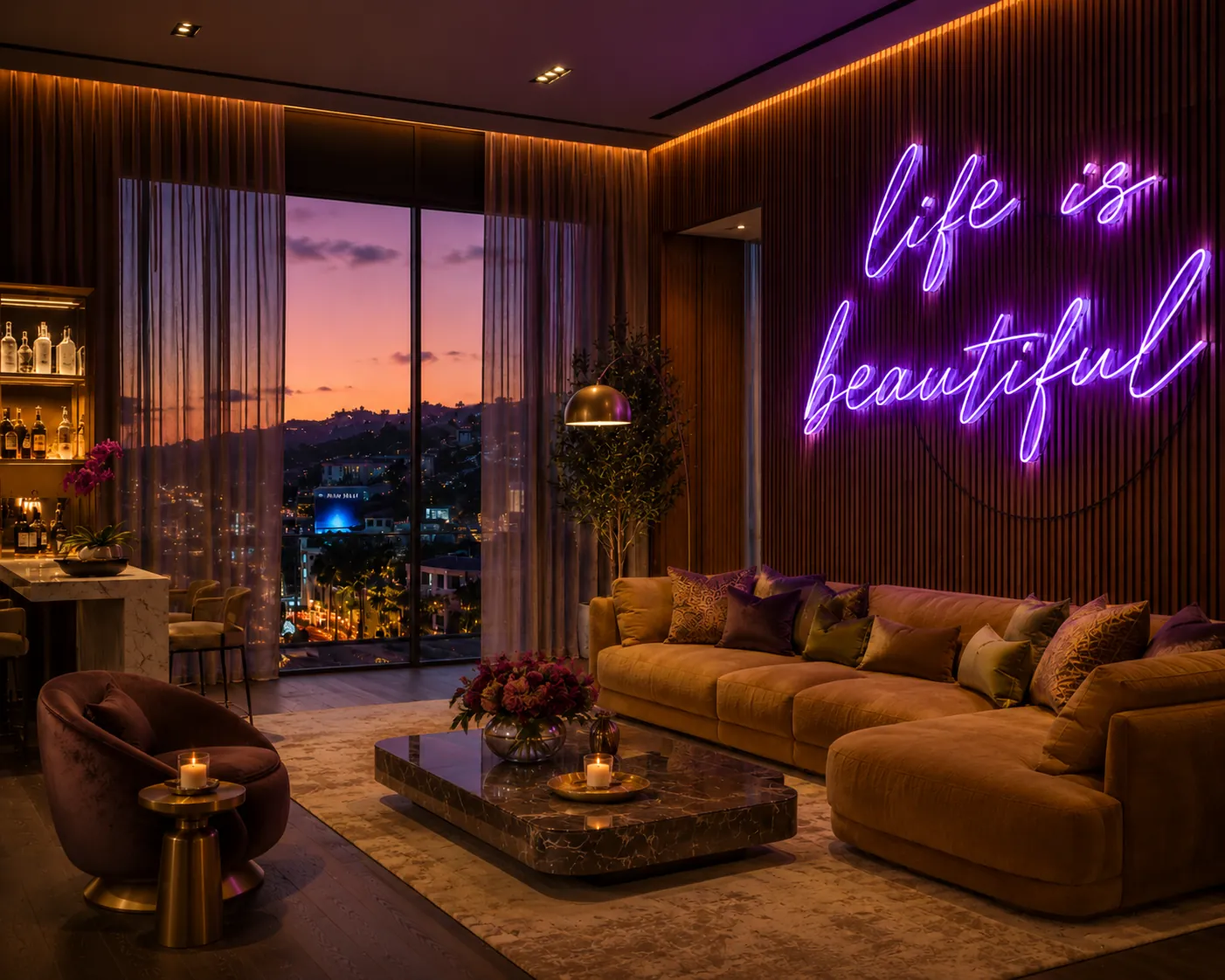
The most common mistake we are asked to correct is motorization installed as an afterthought: visible motors, audible drives, mismatched controls, drapery that hesitates or stalls.
We specify motorized drapery from the wiring stage forward — Lutron, Somfy, or Crestron — coordinated with the home's lighting and shade ecosystem so a single keypad raises the room from morning to evening without a thought.
Panels run on ceiling-mounted ripple-fold tracks recessed into drywall pockets, powered by hardwired DC motors and fabricated with tailored fullness, interlining, and hand-finished hems. The homeowner sees only fabric.
Across Los Angeles — from west-facing Pacific Palisades great rooms and ocean-view Malibu primary suites to two-story Bel Air entries and oversized glass walls in Beverly Hills modernist homes — the studio's motorized programs are designer-led fabrication coordinated with the architect, integrator, and lighting designer.