
- 20+ Years of Design Experience — Olga Rechdouni, ASID
- ASID Professional Member
- Custom Design · Fabrication · Installation
- Luxury Homes Throughout Los Angeles
Venice Bungalow Primary Bedroom
This project is a conceptual design study created to explore custom window treatment solutions, fabric applications, motorization systems, and architectural integration. Images are illustrative renderings and do not represent a completed installation.
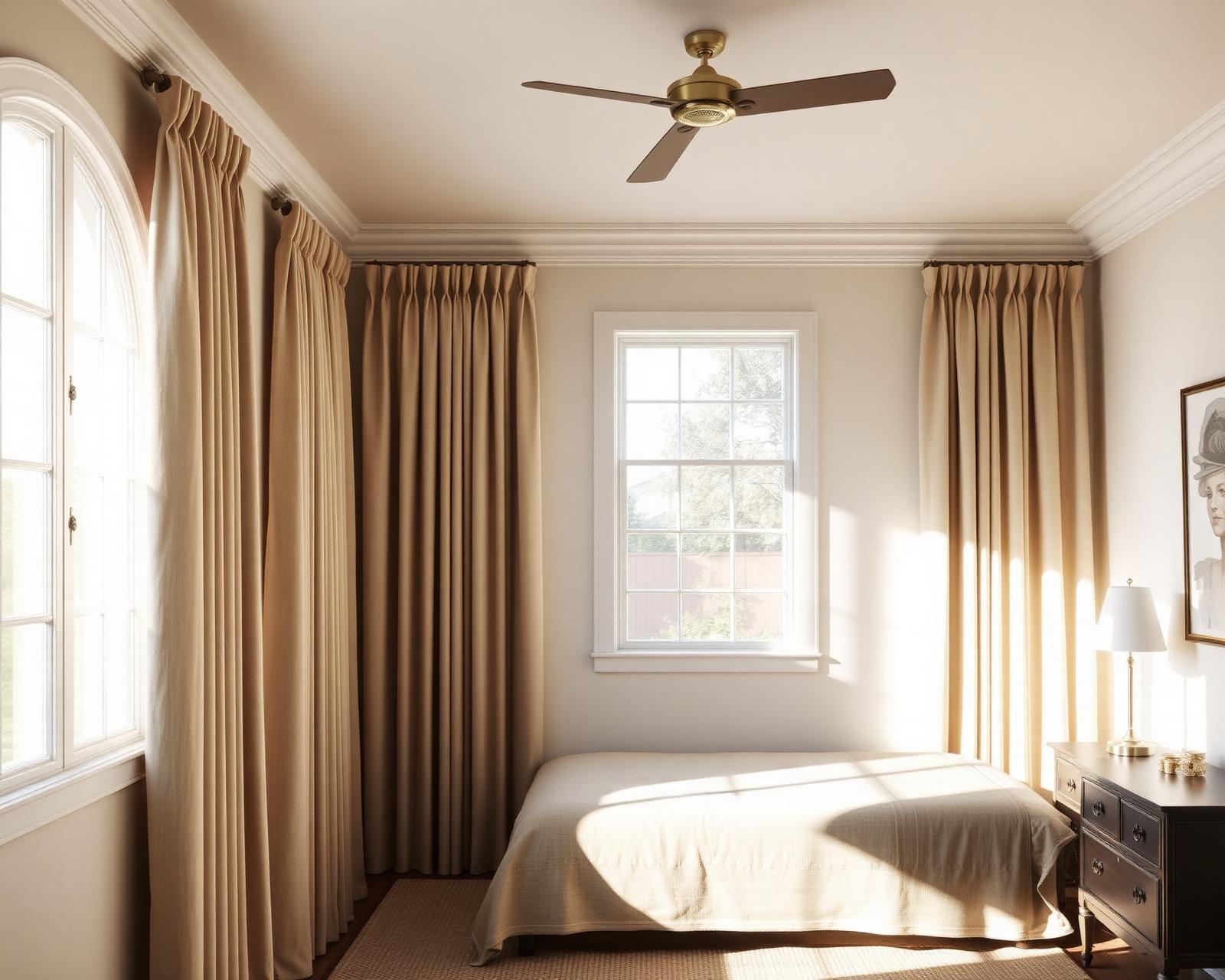
Blackout Drapery in Linen-Faced Three-Pass — a design project in Venice, CA. The studio's specification practice in design intent, fabric, hardware, fullness, and installation, written from Olga's perspective.
A 1920s Venice bungalow primary bedroom with a tin roof, west-facing exposure, and a homeowner who works night-shift hours. True blackout was the brief — but the room is small, the ceiling is 8 feet, and any heavy program risked overwhelming the cottage scale.
Tailored pleat in a linen-faced three-pass blackout fabric, ceiling-mounted to gain perceived height, with side returns sealed to the wall to eliminate light leak. The blackout had to feel like quiet linen, not like a stage curtain.
Triple-pass blackout lining bonded behind a Belgian linen face fabric in oatmeal. The linen reads as the everyday material of the room; the blackout layer is invisible from inside and from the street.
Concealed traverse track set into a shallow ceiling pocket. Return walls finished with magnetic edge channels that seal the panel against the trim — the difference between 95% and true 100% blackout is the side return.
Fullness at 2.5x — enough for the linen face to read full, restrained enough not to crowd an 8-foot ceiling. Panels run wall-to-wall, not casing-deep, so a 6-foot opening becomes a 12-foot drapery wall.
Measured at 0.1 lux at the bedside at noon with the drapery closed. The cottage scale is preserved because the linen face is doing the visual work. My recommendation: blackout is a system, not a fabric. Specify the lining, the side seals, and the ceiling-mount together, or accept a room that is dim but not dark.
- Blackout
- Linen face
- Cottage scale
- Light-seal
- Bungalow
Related from the Studio
The reasoning behind this work
The decisions behind this project — how the room was read, what the drapery was asked to do, and why each specification was chosen — follow the same written method the studio applies to every commission.
For the specification work behind this project, read Custom Blackout Drapery in Venice, Custom Linen Drapery in Venice, and Custom Custom Drapery for Bedrooms in Venice. For the broader practice in this neighborhood, see custom drapery in Venice. Pricing for projects of this scope is set out in the 2026 Custom Drapery Pricing Guide.
The work on this project draws on the studio's reference library. For the heading style at the top of the panel, study Tailored Pleat. For the fabric itself, see Linen, and Blackout.