
- 20+ Years of Design Experience — Olga Rechdouni, ASID
- ASID Professional Member
- Custom Design · Fabrication · Installation
- Luxury Homes Throughout Los Angeles
Pinch Pleat Drapery
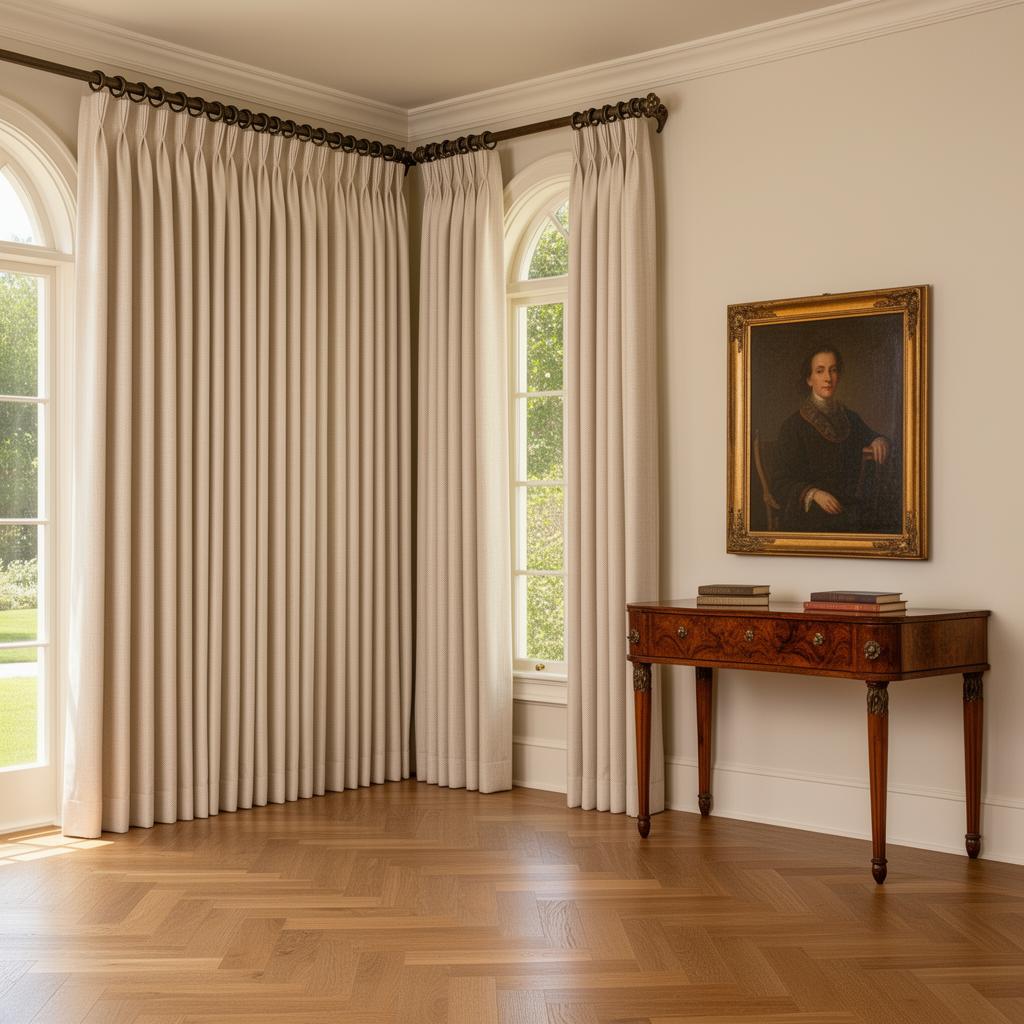
Pinch pleat is the umbrella name for the hand-tacked heading family that includes the three-finger French pleat and the two-finger Euro pleat. Specified in the studio, pinch pleat drapery reads as tailored, disciplined, and unmistakably custom — the architectural standard for serious residential drapery.
Why Choose This Style
Pinch pleat panels are gathered into two, three, or four fingers and hand-stitched at the top of the heading. The result is a column of fabric that falls in evenly spaced, disciplined folds — the rhythm tape-formed and clip-ring alternatives cannot reproduce.
We specify the three-finger French variant in formal and transitional rooms, the two-finger Euro variant in tailored modern interiors, and the four-finger variant only in estate-scale traditional rooms where the heading is meant to read as ornament.
Pinch pleat is the right answer when the architecture is asking the drapery to feel as considered as the millwork — primary suites with crown molding, formal living and dining rooms, libraries, and tall casement openings.
Where Pinch Pleat Drapery Belongs
- Formal living rooms
- Dining rooms
- Primary suites
- Libraries and studies
- 9–12 ft. ceilings
- Crown-molded rooms
- Coved and beamed ceilings
- Traditional
- Transitional
- Spanish Colonial
- Mediterranean
- English Country
Frequently Asked Questions
- Is pinch pleat the same as French pleat?
- French pleat is the three-finger version of pinch pleat. Euro pleat is the two-finger version. 'Pinch pleat' is the umbrella term for the hand-tacked, finger-gathered heading family.
- What fullness should pinch pleat drapery be made at?
- We specify 2.5 to 3 times fullness. Anything less reads as skimped; anything more compresses the pleats and loses the architectural rhythm.
- Can pinch pleat drapery be motorized?
- Yes. We routinely pair pinch pleat panels with concealed Lutron or Somfy track systems, especially in primary suites and great rooms with high or hard-to-reach mounting.
Pinch Pleat Drapery Across Los Angeles
The studio works privately throughout Greater Los Angeles — measuring, fabricating, and installing pinch pleat drapery for residences in:
Consultations are also available throughout Calabasas, Hidden Hills, Hancock Park, Woodland Hills, and the surrounding foothill and coastal neighborhoods — see all studio service areas.
Pinch Pleat Drapery is documented across the studio archive. Recent installations include Woodland Hills French Pleat Drapery, Reseda Great Room Drapery, and Beverly Hills Estate Window Treatments. For the broader practice in this area, see custom drapery in Beverly Hills, and custom drapery in Woodland Hills. Pricing for projects of this scope is set out in the 2026 Custom Drapery Pricing Guide.