
- 20+ Years of Design Experience — Olga Rechdouni, ASID
- ASID Professional Member
- Custom Design · Fabrication · Installation
- Luxury Homes Throughout Los Angeles
Custom Drapery for Living Rooms
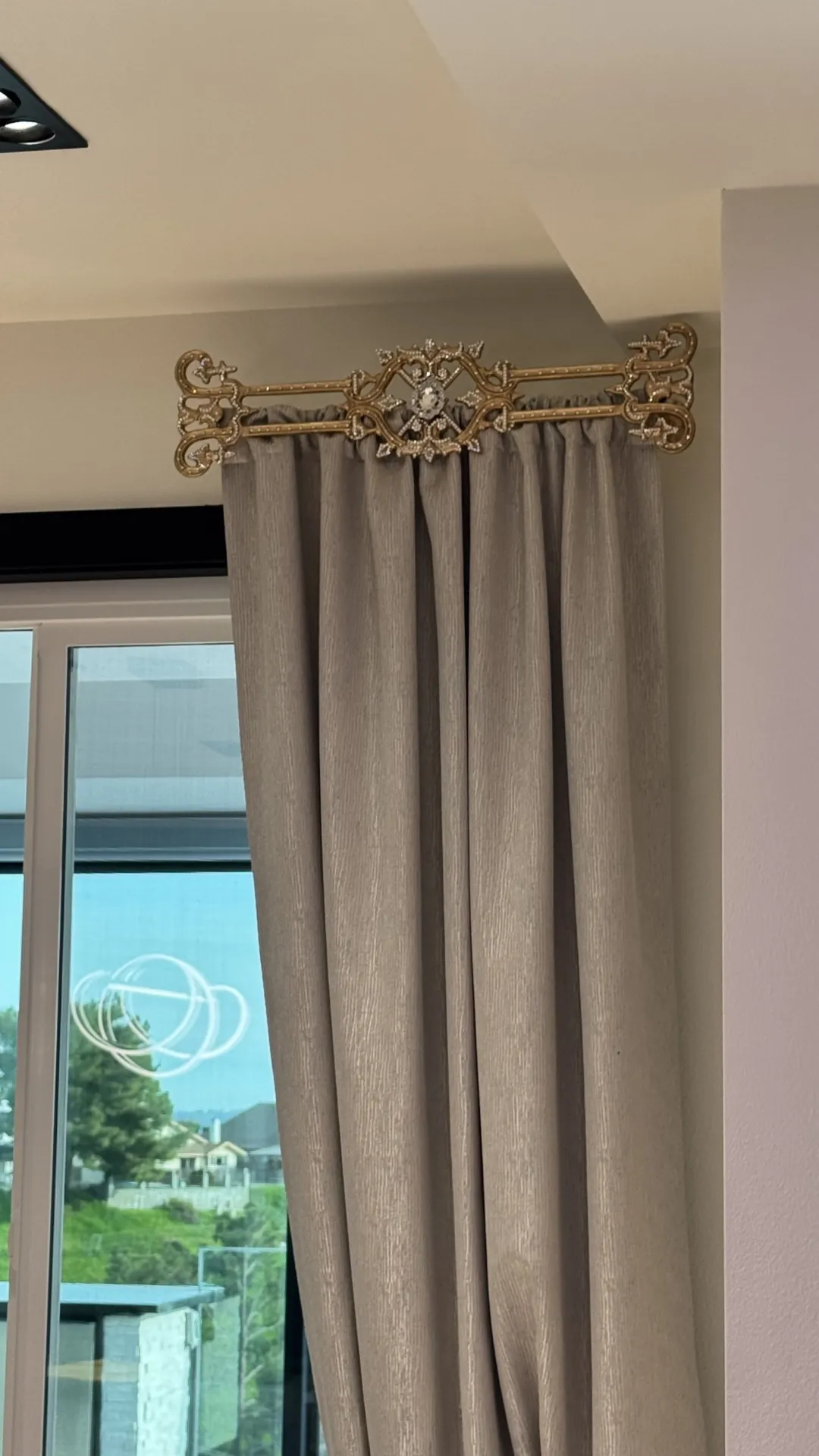
Living rooms are where the drapery program is most often seen and least often forgiven. The studio specifies living-room drapery to read as architecture: floor-to-ceiling panels, hand-tacked headings, and fabric chosen for the room's light — not for a swatch wall.
Why Choose This Style
Living-room drapery sets the formality of the whole house. A French pleat in a heavyweight linen reads as tailored and timeless; a ripple fold in a sheer reads as contemporary and architectural. Both are correct — for different rooms.
We mount living-room drapery ceiling-to-floor whenever the architecture allows, so the eye reads the wall as taller and the room as more composed.
Lining and interlining are non-negotiable in primary living rooms: they give the panel weight, body, and the fall that distinguishes designer drapery from builder-grade.
Where Living Room Drapery Belongs
- Formal living rooms
- Casual living rooms
- Great rooms
- Family rooms
- 8–12 ft. standard
- Specified taller when architecture allows
- Spanish Colonial
- Mediterranean
- Transitional
- Contemporary
- Modernist
Frequently Asked Questions
- Should living-room drapery puddle on the floor?
- Only in formal or romantic rooms with traditional architecture. In contemporary living rooms we specify a kiss-to-floor break — the panel meets the floor cleanly without pooling.
- What pleat style is best for a living room?
- French pleat for traditional and transitional architecture; ripple fold for contemporary. The room's architecture tells us which one before the fabric is chosen.
- Should living-room drapery be layered with sheers?
- Almost always, when the room faces the street, the sun, or another property. Sheers handle daytime light; the over-drapery handles privacy and evening mood.
Living Room Drapery Across Los Angeles
The studio works privately throughout Greater Los Angeles — measuring, fabricating, and installing living room drapery for residences in:
Consultations are also available throughout Calabasas, Hidden Hills, Hancock Park, Woodland Hills, and the surrounding foothill and coastal neighborhoods — see all studio service areas.
Living Room Drapery is documented across the studio archive. Recent installations include Reseda Great Room Drapery, Beverly Hills Estate Window Treatments, and Luxury Residential Drapery Portfolio. For the broader practice in this area, see custom drapery in Beverly Hills, and custom drapery in Los Angeles. Pricing for projects of this scope is set out in the 2026 Custom Drapery Pricing Guide.