
- 20+ Years of Design Experience — Olga Rechdouni, ASID
- ASID Professional Member
- Custom Design · Fabrication · Installation
- Luxury Homes Throughout Los Angeles
Custom Drapery for Dining Rooms
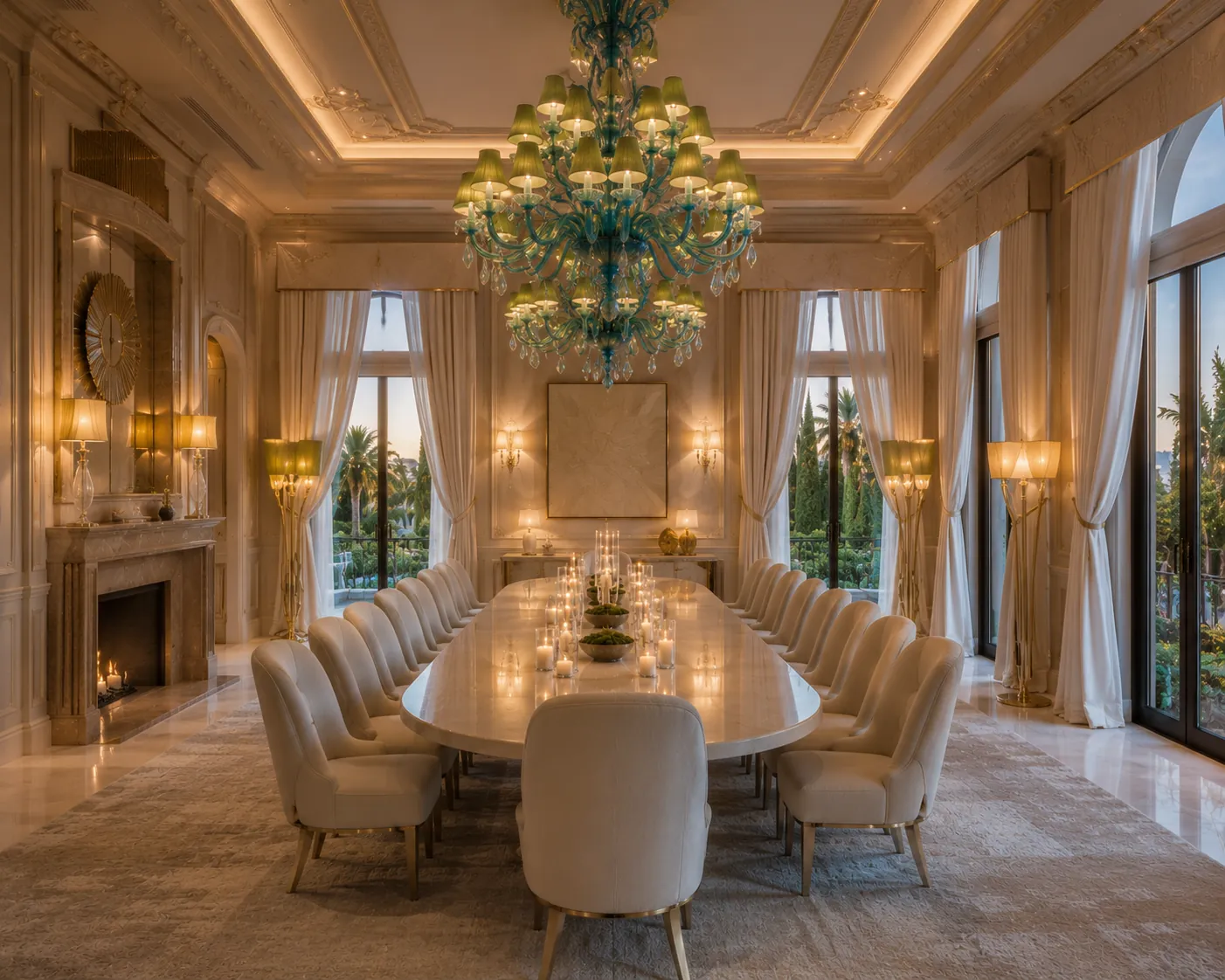
Dining-room drapery is a formality decision. The studio specifies hand-tacked French or goblet pleat panels in heavyweight linen, silk, or wool blend, mounted ceiling-to-floor and lined for body — drapery that reads as composed as the millwork and the table that sit beneath it.
Why Choose This Style
Dining rooms reward decorative heading more than any other room in the house. Goblet pleat, box pleat, and traditional French pleat all read correctly here.
Lining and interlining give the drapery the body to hang in long, disciplined columns under crown molding and tall ceilings.
Acoustic absorption from full-height drapery makes the room more conversational — the difference between a dinner party that flows and one that fights the room.
Where Dining Room Drapery Belongs
- Formal dining rooms
- Banquette dining rooms
- Breakfast rooms
- 8–12 ft. standard
- Specified taller when architecture allows
- Traditional
- Transitional
- Spanish Colonial
- Mediterranean
- Georgian
- French Regency
Frequently Asked Questions
- What pleat is most formal for a dining room?
- Goblet pleat reads as the most decorative; French pleat reads as the most architecturally disciplined. Both are correct in formal dining rooms.
- Should dining-room drapery be lined?
- Always, and we recommend interlining as well. The body it gives the panel is visible from across the room.
- What length is correct for dining-room drapery?
- Floor-length, kiss-to-floor or a small break. Short panels read as builder-grade and undermine the rest of the room.
Dining Room Drapery Across Los Angeles
The studio works privately throughout Greater Los Angeles — measuring, fabricating, and installing dining room drapery for residences in:
Consultations are also available throughout Calabasas, Hidden Hills, Hancock Park, Woodland Hills, and the surrounding foothill and coastal neighborhoods — see all studio service areas.
Dining Room Drapery is documented across the studio archive. Recent installations include Reseda Great Room Drapery, Beverly Hills Estate Window Treatments, and Luxury Residential Drapery Portfolio. For the broader practice in this area, see custom drapery in Beverly Hills, and custom drapery in Los Angeles. Pricing for projects of this scope is set out in the 2026 Custom Drapery Pricing Guide.