
- 20+ Years of Design Experience — Olga Rechdouni, ASID
- ASID Professional Member
- Custom Design · Fabrication · Installation
- Luxury Homes Throughout Los Angeles
Trousdale Modernist Glass Pavilion
This project is a conceptual design study created to explore custom window treatment solutions, fabric applications, motorization systems, and architectural integration. Images are illustrative renderings and do not represent a completed installation.
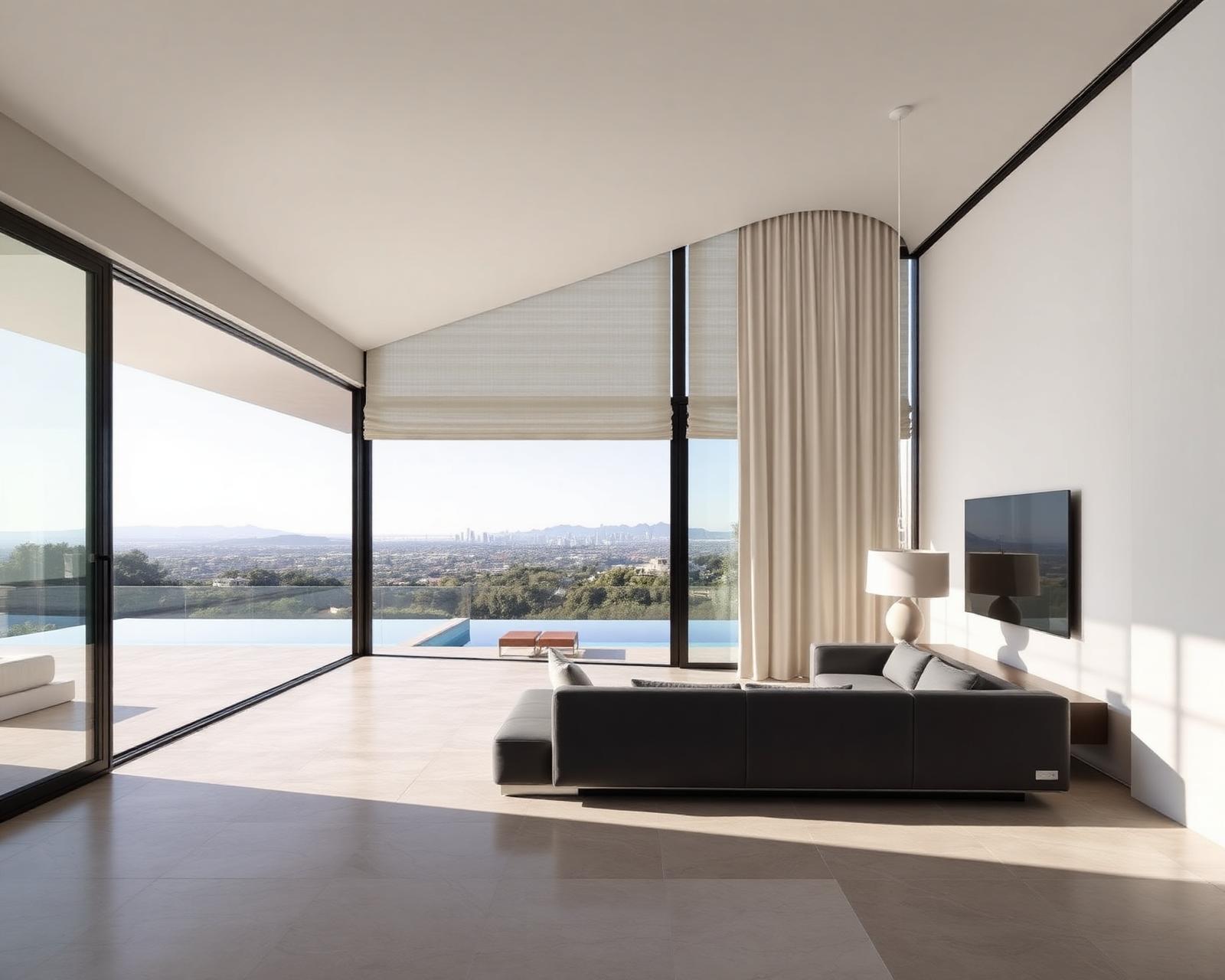
Wave Fold Drapery in Belgian Linen — a design project in Trousdale Estates, CA. The studio's specification practice in design intent, fabric, hardware, fullness, and installation, written from Olga's perspective.
A glass-walled pavilion living room with 14-foot ceilings, two 30-foot walls of pocketing sliding glass, and a minimalist architect insisting the drapery disappear into the architecture when stacked.
Wave fold on a recessed ceiling track set into a 3-inch reveal that runs the full length of both walls. The drapery is invisible from the exterior when open — exactly what the architect wanted — and reads as a single quiet textile when closed.
Belgian linen in chalk, 14 oz., interlined with cotton flannel for fold weight. Linen is the only fabric that holds wave fold geometry correctly at 14-foot drop — synthetic blends compress and read mechanical at that scale.
Forest Group recessed FG-300 track set into a continuous reveal, snap-tape carriers spaced at 120% fullness for deeper wave. Battery motors disqualified at this drop length; hardwired Somfy Sonesse 50 throughout.
Track installed during structural framing — drapery infrastructure cannot be retrofit into a 3-inch reveal. Field-measured to a 1/16-inch tolerance because the reveal allows no compensation. Panels hung in sections and seamed on site.
Stack-back at 15% of track width. From outside the house, the drapery is invisible when open and a single quiet linen plane when closed. My recommendation for modernist architecture: bring the drapery into the structural drawings. Retrofitting concealed track is the most expensive mistake a luxury client can make.
- Modernist
- Wave fold
- Belgian linen
- Concealed track
- 14-foot drops
Related from the Studio
The reasoning behind this work
The decisions behind this project — how the room was read, what the drapery was asked to do, and why each specification was chosen — follow the same written method the studio applies to every commission.
For the specification work behind this project, read Custom Ripple Fold Drapery in Trousdale Estates, Custom Linen Drapery in Trousdale Estates, and Custom Motorized Drapery in Trousdale Estates. For the broader practice in this neighborhood, see custom drapery in Trousdale Estates. Pricing for projects of this scope is set out in the 2026 Custom Drapery Pricing Guide.
The work on this project draws on the studio's reference library. For the heading style at the top of the panel, study Ripple Fold, and Wave Fold. For the fabric itself, see Linen, and Cotton. For the architectural condition resolved here, read Drapery for Sliding Glass Doors, and Drapery for 20-Foot Ceilings.