
- 20+ Years of Design Experience — Olga Rechdouni, ASID
- ASID Professional Member
- Custom Design · Fabrication · Installation
- Luxury Homes Throughout Los Angeles
Decorative Hardware
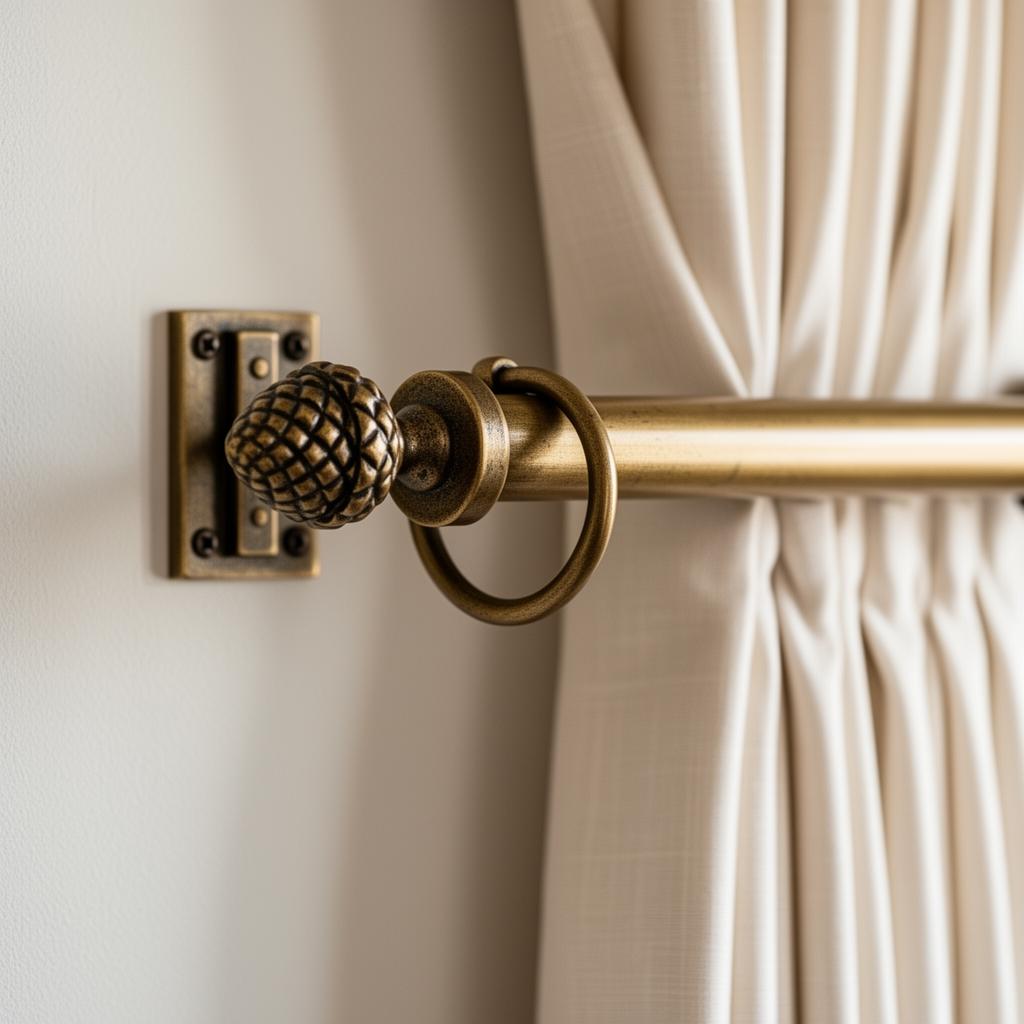
Decorative drapery hardware is the only part of a drapery program designed to be seen. Specified correctly, it reads as part of the architecture — the bronze of the door pulls, the iron of the stair rail, the patina of the lighting. Specified poorly, it advertises itself.
Why Choose This Style
We specify hand-forged bronze, hand-wrought iron, solid brass, and custom-finished steel rods, rings, brackets, and finials sourced from a small set of trusted American and European workshops. Stock hardware is reserved for rooms that have explicitly asked to disappear.
Hardware is selected after the room — not before. The architecture, the millwork, the existing metalwork, and the drapery itself all dictate finish, scale, and finial profile.
Every exposed hardware specification is documented with shop drawings and finish samples, approved by the client before fabrication, and professionally installed under House of Drapery project supervision.
Where Decorative Hardware Belongs
- Libraries
- Studies
- Formal living rooms
- Dining rooms
- Traditional primary suites
- All ceiling heights
- Especially effective in beamed or coved rooms
- Traditional
- English country
- Spanish Colonial
- Mediterranean
- Transitional
Frequently Asked Questions
- When should drapery hardware be exposed versus concealed?
- Concealed in contemporary and modernist rooms; exposed in traditional, transitional, and Mediterranean rooms where the hardware participates in the architecture. The decision is architectural, not stylistic.
- What finishes do you specify most often?
- Hand-forged bronze, hand-wrought iron in oil-rubbed and natural finishes, unlacquered brass, and custom-patinated steel. We avoid plated finishes — they age poorly and never match the existing metalwork in a serious home.
- Do you fabricate custom finials?
- Yes. For estate-scale projects we routinely commission custom finials and brackets from our forge partners to match existing door hardware, stair-rail terminations, or lighting.
Decorative Hardware Across Los Angeles
The studio works privately throughout Greater Los Angeles — measuring, fabricating, and installing decorative hardware for residences in:
Consultations are also available throughout Calabasas, Hidden Hills, Hancock Park, Woodland Hills, and the surrounding foothill and coastal neighborhoods — see all studio service areas.
Decorative Hardware is documented across the studio archive. Recent installations include Woodland Hills French Pleat Drapery, Beverly Hills Estate Window Treatments, and Home Office Drapery. For the broader practice in this area, see custom drapery in Beverly Hills, and custom drapery in Bel Air. Pricing for projects of this scope is set out in the 2026 Custom Drapery Pricing Guide.