
- 20+ Years of Design Experience — Olga Rechdouni, ASID
- ASID Professional Member
- Custom Design · Fabrication · Installation
- Luxury Homes Throughout Los Angeles
Grommet Drapery
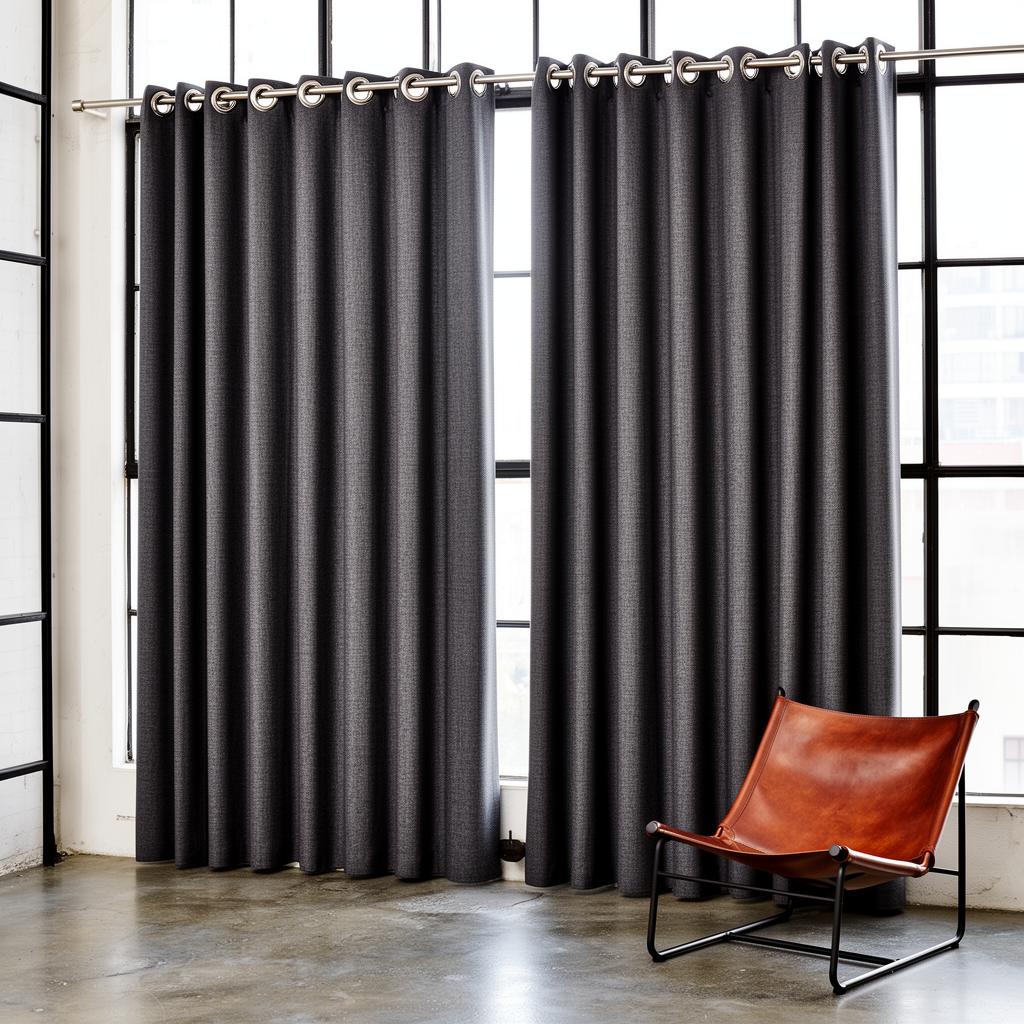
Grommet drapery uses metal eyelets punched along the top hem of the panel, sliding directly onto a decorative rod. The fabric falls in soft, evenly-spaced waves — similar in rhythm to ripple fold, but without the carrier system. It is a casual, contemporary heading specified for secondary spaces where formality is not the brief.
Why Choose This Style
Grommet panels traverse with a hand pull along the rod and stack into a relaxed bunch at either end. They are not architectural, but they are honest about what they are — casual, modern, and meant to read that way.
We specify grommet in lake-house and beach-house secondary rooms, in teen and guest bedrooms, and in casual contemporary great rooms where the over-drapery is a functional layer rather than a styled one.
Grommet finishes — antique brass, brushed nickel, matte black, oil-rubbed bronze — are part of the specification. The eyelet is visible at the top of the panel and should match the rod, the hardware, and the room.
Where Grommet Drapery Belongs
- Secondary bedrooms
- Teen and guest rooms
- Casual family rooms
- Lake- and beach-house living rooms
- 8–10 ft. standard ceilings
- Flat-line modern ceilings
- Casual contemporary
- Coastal cottage
- Lake house
- Mountain casual
Frequently Asked Questions
- Can grommet drapery be motorized?
- No. Grommet panels do not traverse cleanly on motorized carriers — the eyelet rides directly on a rod by hand. For motorized contemporary drapery, we specify ripple fold on a recessed track instead.
- What fullness should grommet drapery be made at?
- We specify 2 to 2.25 times fullness for grommet. The eyelet spacing dictates the wave depth more than the cut fullness does.
- Is grommet appropriate in a formal room?
- No. The visible metal eyelet is a casual gesture by definition. For a formal room, a French or goblet pleat is the correct heading.
Grommet Drapery Across Los Angeles
The studio works privately throughout Greater Los Angeles — measuring, fabricating, and installing grommet drapery for residences in:
Consultations are also available throughout Calabasas, Hidden Hills, Hancock Park, Woodland Hills, and the surrounding foothill and coastal neighborhoods — see all studio service areas.
Grommet Drapery is documented across the studio archive. Recent installations include West Hollywood Condominium, and Porterville Living Room — Embellished Cornice Boxes, Sheers & Lined Drapery. For the broader practice in this area, see custom drapery in West Hollywood, and custom drapery in Malibu. Pricing for projects of this scope is set out in the 2026 Custom Drapery Pricing Guide.